
Guinea Population: 11,855,411
16 VISITORS FROM HERE!«  Previous Country | Next Country Previous Country | Next Country  » Back to Flag Counter Overview » Back to Flag Counter Overview | 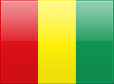 |
| History | |
| Guinea is at a turning point after decades of authoritarian rule since gaining its independence from France in 1958. Sekou TOURE ruled the country as president from independence to his death in 1984. Lansana CONTE came to power in 1984 when the military seized the government after TOURE's death. Gen. CONTE organized and won presidential elections in 1993, 1998, and 2003, though results were questionable due to a lack in transparency and neutrality in the electoral process. Upon CONTE's death in December 2008, Capt. Moussa Dadis CAMARA led a military coup, seizing power and suspending the constitution. His unwillingness to yield to domestic and international pressure to step down led to heightened political tensions that peaked in September 2009 when presidential guards opened fire on an opposition rally killing more than 150 people. In early December 2009, CAMARA was wounded in an assassination attempt and exiled to Burkina Faso. A transitional government led by Gen. Sekouba KONATE paved the way for Guinea's transition to a fledgling democracy. The country held its first free and competitive democratic presidential and legislative elections in 2010 and 2013 respectively, and in October 2015 held a second consecutive presidential election. Alpha CONDE was reelected to a second five-year term as president in 2015, and the National Assembly was seated in January 2014. CONDE's first cabinet is the first all-civilian government in Guinea. The country held a successful political dialogue in August and September 2016 that brought together the government and opposition to address long-standing tensions. Local elections were held in February 2018, and disputed results in some of the races resulted in ongoing protests against CONDE's government. |

|  |
| |
| Geography | |
| |
| Location: | Western Africa, bordering the North Atlantic Ocean, between Guinea-Bissau and Sierra Leone |
| Geographic coordinates: | 11 00 N, 10 00 W |
| Area: | total: 245,857 sq km land: 245,717 sq km water: 140 sq km Size comparison: slightly smaller than Oregon; slightly larger than twice the size of Pennsylvania |
| Land Boundaries: | total: 4,046 km border countries (6): Cote d'Ivoire 816 km, Guinea-Bissau 421 km, Liberia 590 km, Mali 1062 km, Senegal 363 km, Sierra Leone 794 km |
| Coastline: | 320 km |
| Maritime claims: | territorial sea: 12 nm exclusive economic zone: 200 nm |
| Climate: | generally hot and humid; monsoonal-type rainy season (June to November) with southwesterly winds; dry season (December to May) with northeasterly harmattan winds |
| Terrain: | generally flat coastal plain, hilly to mountainous interior |
| Natural resources: | bauxite, iron ore, diamonds, gold, uranium, hydropower, fish, salt |
| Land use: | agricultural land: 58.1% (2011 est.) arable land: 11.8% (2011 est.) permanent crops: 2.8% (2011 est.) permanent pasture: 43.5% (2011 est.) forest: 26.5% (2011 est.) other: 15.4% (2011 est.) |
| Irrigated land: | 950 sq km (2012) |
| Natural hazards: | hot, dry, dusty harmattan haze may reduce visibility during dry season |
| Current Environment Issues: | deforestation; inadequate potable water; desertification; soil contamination and erosion; overfishing, overpopulation in forest region; poor mining practices lead to environmental damage; water pollution; improper waste disposal |
| International Environment Agreements: | party to: Biodiversity, Climate Change, Climate Change-Kyoto Protocol, Desertification, Endangered Species, Hazardous Wastes, Law of the Sea, Ozone Layer Protection, Ship Pollution, Wetlands, Whaling signed, but not ratified: none of the selected agreements |
| ^Back to Top | |
| People | |
| |
| Nationality: | noun: Guinean(s) adjective: Guinean |
| Ethnic groups: | Fulani (Peuhl) 32.1%, Malinke 29.8%, Susu 19.8%, Guerze 6.2%, Kissi 4.7%, Toma 2.8%, other/no answer 4.6% (2012 est.) |
| Languages: | French (official), Pular, Maninka, Susu, other native languages note: each ethnic group has its own language |
| Religions: | Muslim 89.1%, Christian 6.8%, animist 1.6%, other .1%, none 2.4% (2014 est.) |
| Population: | 11,855,411 (July 2018 est.) |
| Age structure: | 0-14 years: 41.4% (male 2,473,486 /female 2,435,139) 15-24 years: 19.23% (male 1,145,488 /female 1,134,103) 25-54 years: 30.8% (male 1,827,246 /female 1,824,162) 55-64 years: 4.72% (male 269,995 /female 289,164) 65 years and over: 3.85% (male 203,754 /female 252,874) (2018 est.) |
| Dependency ratios: | total dependency ratio: 84.2 (2015 est.) youth dependency ratio: 78.6 (2015 est.) elderly dependency ratio: 5.6 (2015 est.) potential support ratio: 17.8 (2015 est.) |
| Median age: | total: 19 years male: 18.8 years female: 19.3 years (2018 est.) |
| Population growth rate: | 2.75% (2018 est.) |
| Birth rate: | 36.4 births/1,000 population (2018 est.) |
| Death rate: | 8.9 deaths/1,000 population (2018 est.) |
| Net migration rate: | 0 migrant(s)/1,000 population (2018 est.) |
| Urbanization: | urban population: 36.1% of total population (2018) rate of urbanization: 3.54% annual rate of change (2015-20 est.) |
| Major urban areas - population: | 1.843 million CONAKRY (capital) (2018) |
| Sex ratio: | at birth: 1.03 male(s)/female 0-14 years: 1.02 male(s)/female 15-24 years: 1.01 male(s)/female 25-54 years: 1 male(s)/female 55-64 years: 0.93 male(s)/female 65 years and over: 0.81 male(s)/female total population: 1 male(s)/female (2018 est.) Mother's mean age at first birth: 18.9 years (2012 est.) note: median age at first birth among women 25-29 |
| Maternal mortality rate: | 679 deaths/100,000 live births (2015 est.) |
| Infant mortality rate: | total: 55.3 deaths/1,000 live births male: 60.4 deaths/1,000 live births female: 50.1 deaths/1,000 live births (2018 est.) |
| Life expectancy at birth: | total population: 62.1 years male: 60.4 years female: 64 years (2018 est.) |
| Total fertility rate: | 4.98 children born/woman (2018 est.) |
| Contraceptive prevalence rate: | 8.7% (2016) |
| Physicians density: | 0.08 physicians/1,000 population (2016) |
| Hospital bed density: | 0.3 beds/1,000 population (2011) |
| Drinking water source: | improved: urban: 92.7% of population rural: 67.4% of population total: 76.8% of population unimproved: urban: 7.3% of population rural: 32.6% of population total: 23.2% of population (2015 est.) |
| Sanitation facility access: | improved: urban: 34.1% of population (2015 est.) rural: 11.8% of population (2015 est.) total: 20.1% of population (2015 est.) unimproved: urban: 65.9% of population (2015 est.) rural: 88.2% of population (2015 est.) total: 79.9% of population (2015 est.) |
| HIV/AIDS - adult prevalence rate: | 1.5% (2017 est.) |
| HIV/AIDS - people living with HIV/AIDS: | 120,000 (2017 est.) |
| HIV/AIDS - deaths: | 5,100 (2017 est.) |
| Obesity - adult prevalence rate: | 7.7% (2016) |
| Children under the age of 5 years underweight: | 18.3% (2016) |
| Education expenditures: | 2.2% of GDP (2017) |
| Literacy: | definition: age 15 and over can read and write (2015 est.) total population: 30.4% male: 38.1% female: 22.8% (2015 est.) |
| School life expectancy (primary to tertiary education): | total: 9 years male: 10 years female: 8 years (2014) Unemployment, youth ages 15-24: total: 1% male: 1.5% female: 0.6% (2012 est.) |
| ^Back to Top | |
| Government | |
| |
| Country name: | conventional long form: Republic of Guinea conventional short form: Guinea local long form: Republique de Guinee local short form: Guinee former: French Guinea etymology: the country is named after the Guinea region of West Africa that lies along the Gulf of Guinea and stretches north to the Sahel |
| Government type: | presidential republic |
| Capital: | name: Conakry geographic coordinates: 9 30 N, 13 42 W time difference: UTC 0 (5 hours ahead of Washington, DC, during Standard Time) |
| Administrative divisions: | 7 regions administrative and 1 gouvenorat*; Boke, Conakry*, Faranah, Kankan, Kindia, Labe, Mamou, N'Zerekore |
| Independence: | 2 October 1958 (from France) |
| National holiday: | Independence Day, 2 October (1958) |
| Constitution: | history: previous 1958, 1990; latest promulgated 19 April 2010, approved 7 May 2010 amendments: proposed by the National Assembly or by the president of the republic; consideration of proposals requires approval by simple majority vote by the Assembly; passage requires approval in referendum; the president can opt to submit amendments directly to the Assembly, in which case approval requires at least two-thirds majority vote (2017) |
| Legal system: | civil law system based on the French model |
| Suffrage: | 18 years of age; universal |
| Executive branch: | chief of state: President Alpha CONDE (since 21 December 2010) head of government: Prime Minister Ibrahima FOFANA (since 22 May 2018) cabinet: Council of Ministers appointed by the president elections/appointments: president directly elected by absolute majority popular vote in 2 rounds if needed for a 5-year term (eligible for a second term); election last held on 11 October 2015 (next to be held in 2020); prime minister appointed by the president election results: Alpha CONDE reelected president in the first round; percent of vote - Alpha CONDE (RPG) 57.8%, Cellou Dalein DIALLO (UFDG) 31.4%, other 10.8% |
| Legislative branch: | description: unicameral People's National Assembly or Assemblee Nationale Populaire (114 seats; 76 members directly elected in a single nationwide constituency by proportional representation vote and 38 directly elected in single-seat constituencies by simple majority vote; members serve 5-year terms) elections: last held on 28 September 2013 (next was schelduled for January 2019, but postponed indefinitely) election results: percent of vote by party - NA; seats by party - RPG 53, UFDG 37, UFR 10, PEDN 2, UPG 2, other 10; composition - men 89, women 25, percent of women 21.9% |
| Judicial branch: | highest courts: Supreme Court or Cour Supreme (organized into Administrative Chamber and Civil, Penal, and Social Chamber; court consists of the first president, 2 chamber presidents, 10 councillors, the solicitor general, andn/adeputies); Constitutional Court (consists of 9 members) judge selection and term of office: Supreme Court first president appointed by the national president after consultation with the National Assembly; other members appointed by presidential decree; members serve until age 65; Constitutional Court member appointments - 2 by the National Assembly and the president of the republic, 3 experienced judges designated by their peers, 1 experienced lawyer, 1 university professor with expertise in public law designated by peers, and 2 experienced representatives of the Independent National Institution of Human Rights; members serve single 9-year terms subordinate courts: Court of Appeal or Cour d'Appel; High Court of Justice or Cour d'Assises; Court of Account (Court of Auditors); Courts of First Instance (Tribunal de Premiere Instance); labor court; military tribunal; justices of the peace; specialized courts |
| Political parties and leaders: | Bloc Liberal or BL [Faya MILLIMONO] National Party for Hope and Development or PEDN [Lansana KOUYATE] Rally for the Guinean People or RPG [Alpha CONDE] Union for the Progress of Guinea or UPG Union of Democratic Forces of Guinea or UFDG [Cellou Dalein DIALLO] Union of Republican Forces or UFR [Sidya TOURE] |
| International organization participation: | ACP, AfDB, AU, ECOWAS, EITI (compliant country), FAO, G-77, IBRD, ICAO, ICCt, ICRM, IDA, IDB, IFAD, IFC, IFRCS, ILO, IMF, IMO, Interpol, IOC, IOM, IPU, ISO (correspondent), ITSO, ITU, ITUC (NGOs), MIGA, MINURSO, MINUSMA, MONUSCO, NAM, OIC, OIF, OPCW, UN, UNCTAD, UNESCO, UNHCR, UNIDO, UNISFA, UNMISS, UNOCI, UNWTO, UPU, WCO, WFTU (NGOs), WHO, WIPO, WMO, WTO |
| National symbol(s): | elephant; national colors: red, yellow, green |
| National anthem: | name: "Liberte" (Liberty) lyrics/music: unknown/Fodeba KEITA note: adopted 1958 |
| Diplomatic representation in the US: | chief of mission: Ambassador Kerfalla YANSANE (since 24 January 2018) chancery: 2112 Leroy Place NW, Washington, DC 20008 telephone: [1] (202) 986-4300 FAX: [1] (202) 986-3800 |
| Diplomatic representation from the US: | chief of mission: Ambassador Simon HENSHAW (since 4 March 2019) embassy: Transversale #2, Center Administratif de Koloma, Commune de Ratoma, Conakry mailing address: P.O. Box 603, Transversale No. 2, Centre Administratif de Koloma, Commune de Ratoma, Conakry telephone: [224] 655-10-40-00 FAX: [224] 655-10-42-97 |
| ^Back to Top | |
| Economy | |
Guinea is a poor country of approximately 12.9 million people in 2016 that possesses the world's largest reserves of bauxite and largest untapped high-grade iron ore reserves, as well as gold and diamonds. In addition, Guinea has fertile soil, ample rainfall, and is the source of several West African rivers, including the Senegal, Niger, and Gambia. Guinea's hydro potential is enormous and the country could be a major exporter of electricity. The country also has tremendous agriculture potential. Gold, bauxite, and diamonds are Guinea’s main exports. International investors have shown interest in Guinea's unexplored mineral reserves, which have the potential to propel Guinea's future growth. Following the death of long-term President Lansana CONTE in 2008 and the coup that followed, international donors, including the G-8, the IMF, and the World Bank, significantly curtailed their development programs in Guinea. However, the IMF approved a 3-year Extended Credit Facility arrangement in 2012, following the December 2010 presidential elections. In September 2012, Guinea achieved Heavily Indebted Poor Countries completion point status. Future access to international assistance and investment will depend on the government’s ability to be transparent, combat corruption, reform its banking system, improve its business environment, and build infrastructure. In April 2013, the government amended its mining code to reduce taxes and royalties. In 2014, Guinea complied with requirements of the Extractive Industries Transparency Initiative by publishing its mining contracts. Guinea completed its program with the IMF in October 2016 even though some targeted reforms have been delayed. Currently Guinea is negotiating a new IMF program which will be based on Guinea’s new five-year economic plan, focusing on the development of higher value-added products, including from the agro-business sector and development of the rural economy. Political instability, a reintroduction of the Ebola virus epidemic, low international commodity prices, and an enduring legacy of corruption, inefficiency, and lack of government transparency are factors that could impact Guinea’s future growth. Economic recovery will be a long process while the government adjusts to lower inflows of international donor aid following the surge of Ebola-related emergency support. Ebola stalled promising economic growth in the 2014-15 period and impeded several projects, such as offshore oil exploration and the Simandou iron ore project. The economy, however, grew by 6.6% in 2016 and 6.7% in 2017, mainly due to growth from bauxite mining and thermal energy generation as well as the resiliency of the agricultural sector. The 240-megawatt Kaleta Dam, inaugurated in September 2015, has expanded access to electricity for residents of Conakry. An combined with fears of Ebola virus, continue to undermine Guinea's economic viability. Guinea’s iron ore industry took a hit in 2016 when investors in the Simandou iron ore project announced plans to divest from the project. In 2017, agriculture output and public investment boosted economic growth, while the mining sector continued to play a prominent role in economic performance. Successive governments have failed to address the country's crumbling infrastructure. Guinea suffers from chronic electricity shortages; poor roads, rail lines and bridges; and a lack of access to clean water - all of which continue to plague economic development. The present government, led by President Alpha CONDE, is working to create an environment to attract foreign investment and hopes to have greater participation from western countries and firms in Guinea's economic development. | |
| GDP (purchasing power parity): | $27.97 billion (2017 est.) $25.84 billion (2016 est.) $23.39 billion (2015 est.) note: data are in 2017 dollars |
| GDP (official exchange rate): | $10.25 billion (2017 est.) |
| GDP - real growth rate: | 8.2% (2017 est.) 10.5% (2016 est.) 3.8% (2015 est.) |
| GDP - per capita (PPP): | $2,200 (2017 est.) $2,000 (2016 est.) $1,900 (2015 est.) note: data are in 2017 dollars |
| Gross national saving: | 5.1% of GDP (2017 est.) -6.3% of GDP (2016 est.) -5.3% of GDP (2015 est.) GDP - composition, by end use: household consumption: 80.8% (2017 est.) government consumption: 6.6% (2017 est.) investment in fixed capital: 9.1% (2017 est.) investment in inventories: 18.5% (2017 est.) exports of goods and services: 21.9% (2017 est.) imports of goods and services: -36.9% (2017 est.) GDP - composition, by sector of origin: agriculture: 19.8% (2017 est.) industry: 32.1% (2017 est.) services: 48.1% (2017 est.) |
| Agriculture - products: | rice, coffee, pineapples, mangoes, palm kernels, cocoa, cassava (manioc, tapioca), bananas, potatoes, sweet potatoes; cattle, sheep, goats; timber |
| Industries: | bauxite, gold, diamonds, iron ore; light manufacturing, agricultural processing |
| Industrial production growth rate: | 11% (2017 est.) |
| Labor force: | 5.558 million (2017 est.) |
| Labor force - by occupation: | agriculture: 76% industry: 24% (2006 est.) |
| Unemployment rate: | 2.7% (2017 est.) 2.8% (2016 est.) |
| Population below poverty line: | 47% (2006 est.) |
| Household income or consumption by percentage share: | lowest 10%: 2.7% highest 10%: 30.3% (2007) |
| Distribution of family income - Gini index: | 39.4 (2007) 40.3 (1994) |
| Budget: | revenues: 1.7 billion (2017 est.) expenditures: 1.748 billion (2017 est.) |
| Taxes and other revenues: | 16.6% (of GDP) (2017 est.) Budget surplus (+) or deficit (-): -0.5% (of GDP) (2017 est.) |
| Public debt: | 37.9% of GDP (2017 est.) 41.8% of GDP (2016 est.) |
| Fiscal year: | calendar year |
| Inflation rate (consumer prices): | 8.9% (2017 est.) 8.2% (2016 est.) |
| Current account balance: | -$705 million (2017 est.) -$2.705 billion (2016 est.) |
| Exports: | $3.514 billion (2017 est.) $1.954 billion (2016 est.) |
| Exports - commodities: | bauxite, gold, diamonds, coffee, fish, agricultural products |
| Exports - partners: | China 35.8%, Ghana 20.1%, UAE 11.6%, India 4.3% (2017) |
| Imports: | $4.799 billion (2017 est.) $4.43 billion (2016 est.) |
| Imports - commodities: | petroleum products, metals, machinery, transport equipment, textiles, grain and other foodstuffs |
| Imports - partners: | Netherlands 17.2%, China 13.2%, India 11.8%, Belgium 10%, France 6.9%, UAE 4.5% (2017) |
| Reserves of foreign exchange and gold: | $331.8 million (31 December 2017 est.) $383.4 million (31 December 2016 est.) |
| Debt - external: | $1.458 billion (31 December 2017 est.) $1.462 billion (31 December 2016 est.) |
| Stock of direct foreign investment - at home: | $3.174 billion (31 December 2017 est.) $2.391 billion (31 December 2016 est.) |
| Stock of direct foreign investment - abroad: | $1.8 million (31 December 2017 est.) $69.19 million (31 December 2016 est.) |
| Market value of publicly traded shares: | n/a |
| Exchange rates: | Guinean francs (GNF) per US dollar - 9,230 (2017 est.) 9,085 (2016 est.) 9,085 (2015 est.) 7,485.5 (2014 est.) 7,014.1 (2013 est.) |
| ^Back to Top | |
| Energy | |
| |
| Electricity - production: | 598 million kWh (2016 est.) |
| Electricity - consumption: | 556.1 million kWh (2016 est.) |
| Electricity - exports: | 0 kWh (2016 est.) |
| Electricity - imports: | 0 kWh (2016 est.) |
| Electricity - installed generating capacity: | 550,000 kW (2016 est.) |
| Electricity - from fossil fuels: | 33% of total installed capacity (2016 est.) |
| Electricity - from nuclear fuels: | 0% of total installed capacity (2017 est.) |
| Electricity - from hydroelectric plants: | 67% of total installed capacity (2017 est.) |
| Electricity - from other renewable sources: | 0% of total installed capacity (2017 est.) |
| Crude oil - production: | 0 bbl/day (2017 est.) |
| Crude oil - exports: | 0 bbl/day (2015 est.) |
| Crude oil - imports: | 0 bbl/day (2015 est.) |
| Crude oil - proved reserves: | 0 bbl (1 January 2018 est.) |
| Refined petroleum products - production: | 0 bbl/day (2017 est.) |
| Refined petroleum products - consumption: | 19,000 bbl/day (2016 est.) |
| Refined petroleum products - exports: | 0 bbl/day (2015 est.) |
| Refined petroleum products - imports: | 18,460 bbl/day (2015 est.) |
| Natural gas - production: | 0 cu m (2017 est.) |
| Natural gas - consumption: | 0 cu m (2017 est.) |
| Natural gas - exports: | 0 cu m (2017 est.) |
| Natural gas - imports: | 0 cu m (2017 est.) |
| Natural gas - proved reserves: | 0 cu m (1 January 2014 est.) |
| Carbon dioxide emissions from consumption of energy: | 2.794 million Mt (2017 est.) |
| ^Back to Top | |
| Communications | |
| |
| Cellular Phones in use: | total subscriptions: 10.8 million subscriptions per 100 inhabitants: 87 (July 2016 est.) |
| Telephone system: | general assessment: huge improvement over the last ten years; in May 2019, 4G wifi was launched in the capital; the capital and the regional administrative centers have 3G access; in 2018 the set up of an IXP (Internet Exchange Point) will reduce cost of Internet bandwidth and improve infrastructure (2018) domestic: there is national coverage and Conakry is reasonably well-served; coverage elsewhere remains inadequate but is improving; fixed-line teledensity less than 1 per 100 persons; mobile-cellular subscribership is expanding rapidly and now approaches 90 per 100 persons (2018) international: country code - 224; satellite earth station - 1 Intelsat (Atlantic Ocean); first international fibre optic submarine cable installed in 2012 |
| Broadcast media: | government maintains marginal control over broadcast media; single state-run TV station; state-run radio broadcast station also operates several stations in rural areas; a dozen private television stations; a steadily increasing number of privately owned radio stations, nearly all in Conakry, and about a dozen community radio stations; foreign TV programming available via satellite and cable subscription services (2019) |
| Internet country code: | .gn |
| Internet users: | total: 1,185,148 percent of population: 9.8% (July 2016 est.) |
| ^Back to Top | |
| Transportation | |
| |
| Airports: | 16 (2013) |
| Airports (paved runways): | total 4 (2017) over 3,047 m: 1 (2017) 1,524 to 2,437 m: 3 (2017) |
| Airports (unpaved runways): | total 12 (2013) 1,524 to 2,437 m: 7 (2013) 914 to 1,523 m: 3 (2013) under 914 m: 2 (2013) |
| Railways: | total 1,086 km (2017) standard gauge: 279 km 1.435-m gauge (2017) narrow gauge: 807 km 1.000-m gauge (2017) |
| Roadways: | total 44,301 km (2018) paved: 3,346 km (2018) unpaved: 40,955 km (2018) |
| Waterways: | 1,300 km (navigable by shallow-draft native craft in the northern part of the Niger River system) (2011) |
| Merchant marine: | total 1 by type: other 1 (2018) |
| Ports and terminals: | major seaport(s): Conakry, Kamsar |
| ^Back to Top | |
| Military | |
| |
| Military branches: | National Armed Forces: Army, Guinean Navy (Armee de Mer or Marine Guineenne, includes Marines), Guinean Air Force (Force Aerienne de Guinee) (2009) |
| Military service age and obligation: | no compulsory military service (2017) |
| Military expenditures: | 2.49% of GDP (2016) 3.31% of GDP (2015) 2.97% of GDP (2014) 3.16% of GDP (2013) 2.98% of GDP (2012) |
| ^Back to Top | |
| Transnational Issues | |
| |
| Disputes - International: | Sierra Leone considers Guinea's definition of the flood plain limits to define the left bank boundary of the Makona and Moa Rivers excessive and protests Guinea's continued occupation of these lands, including the hamlet of Yenga, occupied since 1998 |
| ^Back to Top | |
«
Previous Country | Next Country » Back to Flag Counter OverviewSource: CIA - The World Factbook