
Namibia Population: 2,533,224
NO VISITORS FROM HERE YET!Back to Flag Counter Overview | 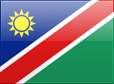 |
| History | |
| Namibia gained independence in 1990. Prior to independence, apartheid South Africa occupied the former German colony known as South-West Africa during World War I and administered it as a mandate until after World War II, when it annexed the territory. In 1966, the Marxist South-West Africa People's Organization (SWAPO) guerrilla group launched a war of independence for the area that became Namibia, but it was not until 1988 that South Africa agreed to end its administration in accordance with a UN peace plan for the entire region. Namibia has been governed by SWAPO since the country won independence, though the party has dropped much of its Marxist ideology. President Hage GEINGOB was elected in 2014 in a landslide victory, replacing Hifikepunye POHAMBA who stepped down after serving two terms. SWAPO retained its parliamentary super majority in the 2014 elections and established a system of gender parity in parliamentary positions. |

|  |
| |
| Geography | |
| |
| Location: | Southern Africa, bordering the South Atlantic Ocean, between Angola and South Africa |
| Geographic coordinates: | 22 00 S, 17 00 E |
| Area: | total: 824,292 sq km land: 823,290 sq km water: 1,002 sq km Size comparison: almost seven times the size of Pennsylvania; slightly more than half the size of Alaska |
| Land Boundaries: | total: 4,220 km border countries (4): Angola 1427 km, Botswana 1544 km, South Africa 1005 km, Zambia 244 km |
| Coastline: | 1,572 km |
| Maritime claims: | territorial sea: 12 nm exclusive economic zone: 200 nm contiguous zone: 24 nm |
| Climate: | desert; hot, dry; rainfall sparse and erratic |
| Terrain: | mostly high plateau; Namib Desert along coast; Kalahari Desert in east |
| Natural resources: | diamonds, copper, uranium, gold, silver, lead, tin, lithium, cadmium, tungsten, zinc, salt, hydropower, fish, note, suspected deposits of oil, coal, and iron ore |
| Land use: | agricultural land: 47.2% (2011 est.) arable land: 1% (2011 est.) permanent crops: 0% (2011 est.) permanent pasture: 46.2% (2011 est.) forest: 8.8% (2011 est.) other: 44% (2011 est.) |
| Irrigated land: | 80 sq km (2012) |
| Natural hazards: | prolonged periods of drought |
| Current Environment Issues: | depletion and degradation of water and aquatic resources; desertification; land degradation; loss of biodiversity and biotic resources; wildlife poaching |
| International Environment Agreements: | party to: Antarctic-Marine Living Resources, Biodiversity, Climate Change, Climate Change-Kyoto Protocol, Desertification, Endangered Species, Hazardous Wastes, Law of the Sea, Ozone Layer Protection, Wetlands signed, but not ratified: none of the selected agreements |
| ^Back to Top | |
| People | |
| |
| Nationality: | noun: Namibian(s) adjective: Namibian |
| Ethnic groups: | Ovambo 50%, Kavangos 9%, Herero 7%, Damara 7%, European and African ancestry 6.5%, European 6%, Nama 5%, Caprivian 4%, San 3%, Baster 2%, Tswana .5% |
| Languages: | Oshiwambo languages 49.7%, Nama/Damara 11%, Kavango languages 10.4%, Afrikaans 9.4% (common language of most of the population), Herero languages 9.2%, Zambezi languages 4.9%, English (official) 2.3%, other African languages 1.5%, other European languages .7%, other 1% (2016 est.) note: Namibia has 13 recognized national languages, including 10 indigenous African languages and 3 Indo-European languages |
| Religions: | Christian 80% to 90% (at least 50% Lutheran), indigenous beliefs 10% to 20% |
| Population: | 2,533,224 (July 2018 est.) note: estimates for this country explicitly take into account the effects of excess mortality due to AIDS; this can result in lower life expectancy, higher infant mortality, higher death rates, lower population growth rates, and changes in the distribution of population by age and sex than would otherwise be expected |
| Age structure: | 0-14 years: 36.54% (male 467,392 /female 458,190) 15-24 years: 20.34% (male 257,190 /female 257,984) 25-54 years: 34.74% (male 421,849 /female 458,118) 55-64 years: 4.46% (male 50,459 /female 62,478) 65 years and over: 3.93% (male 42,381 /female 57,183) (2018 est.) |
| Dependency ratios: | total dependency ratio: 68.1 (2015 est.) youth dependency ratio: 62.2 (2015 est.) elderly dependency ratio: 5.8 (2015 est.) potential support ratio: 17.1 (2015 est.) |
| Median age: | total: 21.4 years male: 20.7 years female: 22.2 years (2018 est.) |
| Population growth rate: | 1.91% (2018 est.) |
| Birth rate: | 26.8 births/1,000 population (2018 est.) |
| Death rate: | 7.7 deaths/1,000 population (2018 est.) |
| Net migration rate: | 0 migrant(s)/1,000 population (2018 est.) |
| Urbanization: | urban population: 50% of total population (2018) rate of urbanization: 4.2% annual rate of change (2015-20 est.) |
| Major urban areas - population: | 404,000 WINDHOEK (capital) (2018) |
| Sex ratio: | at birth: 1.03 male(s)/female 0-14 years: 1.02 male(s)/female 15-24 years: 1 male(s)/female 25-54 years: 0.92 male(s)/female 55-64 years: 0.81 male(s)/female 65 years and over: 0.74 male(s)/female total population: 0.96 male(s)/female (2018 est.) Mother's mean age at first birth: 21.5 years (2013 est.) note: median age at first birth among women 25-29 |
| Maternal mortality rate: | 265 deaths/100,000 live births (2015 est.) |
| Infant mortality rate: | total: 33.8 deaths/1,000 live births male: 36 deaths/1,000 live births female: 31.6 deaths/1,000 live births (2018 est.) |
| Life expectancy at birth: | total population: 64.4 years male: 62.7 years female: 66.2 years (2018 est.) |
| Total fertility rate: | 3.21 children born/woman (2018 est.) |
| Contraceptive prevalence rate: | 56.1% (2013) |
| Hospital bed density: | 2.7 beds/1,000 population (2009) |
| Drinking water source: | improved: urban: 98.2% of population rural: 84.6% of population total: 91% of population unimproved: urban: 1.8% of population rural: 15.4% of population total: 9% of population (2015 est.) |
| Sanitation facility access: | improved: urban: 54.5% of population (2015 est.) rural: 16.8% of population (2015 est.) total: 34.4% of population (2015 est.) unimproved: urban: 45.5% of population (2015 est.) rural: 83.2% of population (2015 est.) total: 65.6% of population (2015 est.) |
| HIV/AIDS - adult prevalence rate: | 12.1% (2017 est.) |
| HIV/AIDS - people living with HIV/AIDS: | 200,000 (2017 est.) |
| HIV/AIDS - deaths: | 2,700 (2017 est.) |
| Obesity - adult prevalence rate: | 17.2% (2016) |
| Children under the age of 5 years underweight: | 13.2% (2013) |
| Education expenditures: | 3.1% of GDP (2014) |
| Literacy: | definition: age 15 and over can read and write (2015 est.) total population: 81.9% male: 79.2% female: 84.5% (2015 est.) Unemployment, youth ages 15-24: total: 44.9% male: 37.7% female: 52.5% (2016 est.) |
| ^Back to Top | |
| Government | |
| |
| Country name: | conventional long form: Republic of Namibia conventional short form: Namibia local long form: Republic of Namibia local short form: Namibia former: German South-West Africa (Deutsch-Suedwestafrika), South-West Africa etymology: named for the coastal Namib Desert; the name "namib" means "vast place" in the Nama/Damara language |
| Government type: | presidential republic |
| Capital: | name: Windhoek geographic coordinates: 22 34 S, 17 05 E time difference: UTC+1 (6 hours ahead of Washington, DC, during Standard Time) daylight saving time: +1hr, begins first Sunday in September; ends first Sunday in April etymology: may derive from the Afrikaans word "wind-hoek" meaning "windy corner" |
| Administrative divisions: | 14 regions; Erongo, Hardap, //Karas, Kavango East, Kavango West, Khomas, Kunene, Ohangwena, Omaheke, Omusati, Oshana, Oshikoto, Otjozondjupa, Zambezi; note - the Karas Region was renamed //Karas in September 2013 to include the alveolar lateral click of the Khoekhoegowab language |
| Independence: | 21 March 1990 (from South African mandate) |
| National holiday: | Independence Day, 21 March (1990) |
| Constitution: | history: history: adopted 9 February 1990, entered into force 21 March 1990 amendments: initiated by the Cabinet; passage requires two-thirds majority vote of the National Assembly membership and of the National Council of Parliament and assent by the president of the republic; if the National Council fails to pass an amendment, the president can call for a referendum; passage by referendum requires two-thirds majority of votes cast; amendments that detract from or repeal constitutional articles on fundamental rights and freedoms cannot be amended, and the requisite majorities needed by Parliament to amend the constitution cannot be changed; amended 1998, 2010, 2014 (2017) |
| Legal system: | mixed legal system of uncodified civil law based on Roman-Dutch law and customary law |
| Suffrage: | 18 years of age; universal |
| Executive branch: | chief of state: President Hage GEINGOB (since 21 March 2015); Vice President Nangola MBUMBA (since 8 February 2018); note - the president is both chief of state and head of government head of government: President Hage GEINGOB (since 21 March 2015); Vice President Nangola MBUMBA (since 8 February 2018); Prime Minister Saara KUUGONGELWA-AMADHILA (since 21 March 2015) cabinet: Cabinet appointed by the president from among members of the National Assembly elections/appointments: president elected by absolute majority popular vote in 2 rounds if needed for a 5-year term (eligible for a second term); election last held on 28 November 2014 (next to be held in November 2019) election results: Hage GEINGOB elected president in the first round; percent of vote - Hage GEINGOB (SWAPO) 86.7%, McHenry VENAANI (DTA) 5.0%, Hidipo HAMUTENYA (RDP) 3.4%, Asser MBAI (NUDO)1.9%, Henk MUDGE (RP) 1.0%, other 2.0% |
| Legislative branch: | description: bicameral Parliament consists of: National Council (42 seats); members indirectly elected 3 each by the 14 regional councils to serve 5-year terms); note - the Council primarily reviews legislation passed and referred by the National Assembly National Assembly (104 seats; 96 members directly elected in multi-seat constituencies by closed list, proportional representation vote to serve 5-year terms and 8 nonvoting members appointed by the president) elections: National Council - elections for regional councils to determine members of the National Council held on 27 November 2015 (next to be held in November 2020) National Assembly - last held on 28 November 2014 (next to be held in November 2019) election results: National Council - percent of vote by party - NA; seats by party - SWAPO 40, NUDO 1, DPM 1; composition - men 32, women 10, percent of women 23.8% National Assembly - percent of vote by party - SWAPO 80.0%, DTA 4.8%, RDP 3.5%, APP 2.3%, UDF 2.1%, NUDO 2.0%, CPN 1.5%, other 3.8%; seats by party - SWAPO 77, DPM 5, RDP 3, APP 2, UDF 2, NUDO 2, WRP 2, SWANU 1, UPM 1, RP 1; composition - men 61, women 43, percent of women 41.3%; note - total Parliament percent of women 36.3% |
| Judicial branch: | highest courts: Supreme Court (consists of the chief justice and at least 3 judges in quorum sessions) judge selection and term of office: judges appointed by the president of Namibia upon the recommendation of the Judicial Service Commission; judges serve until age 65, but terms can be extended by the president until age 70 subordinate courts: High Court; Labor Court; regional and district magistrates' courts; community courts |
| Political parties and leaders: | All People's Party or APP [Ignatius SHIXWAMENI] National Unity Democratic Organization or NUDO [Estes MUINJANGUE] Popular Democratic Movement or PDM (formerly DTA) [McHenry VENAANI] Rally for Democracy and Progress or RDP [Steve BEZUIDERHOUDT (Acting)] Republican Party or RP [Henk MUDGE] South West Africa National Union or SWANU [Tangeni IIYAMBO] South West Africa People's Organization or SWAPO [Hage GEINGOB] United Democratic Front or UDF [Apius AUCHAB] United People's Movement or UPM [Jan J. VAN WYK] Workers' Revolutionary Party or WRP (formerly CPN) [MPs Salmon FLEERMUYS and Benson KAAPALA] |
| International organization participation: | ACP, AfDB, AU, C, CD, CPLP (associate observer), FAO, G-77, IAEA, IBRD, ICAO, ICCt, ICRM, IDA, IFAD, IFC, IFRCS, ILO, IMF, IMO, Interpol, IOC, IOM, IPU, ISO, ITSO, ITU, ITUC (NGOs), MIGA, NAM, OPCW, SACU, SADC, UN, UNAMID, UNCTAD, UNESCO, UNHCR, UNIDO, UNISFA, UNMIL, UNMISS, UNOCI, UNWTO, UPU, WCO, WHO, WIPO, WMO, WTO |
| National symbol(s): | oryx (antelope); national colors: blue, red, green, white, yellow |
| National anthem: | name: Namibia, Land of the Brave lyrics/music: Axali DOESEB note: adopted 1991 |
| Diplomatic representation in the US: | chief of mission: Ambassador Monica NASHANDI (since 7 November 2018) chancery: 1605 New Hampshire Avenue NW, Washington, DC 20009 telephone: [1] (202) 986-0540 FAX: [1] (202) 986-0443 |
| Diplomatic representation from the US: | chief of mission: Ambassador Lisa A. JOHNSON (since 3 February 2018) embassy: 14 Lossen Street, Windhoek mailing address: Private Bag 12029 Ausspannplatz, Windhoek telephone: [264] (061) 295-8500 FAX: [264] (061) 295-8603 |
| ^Back to Top | |
| Economy | |
Namibia’s economy is heavily dependent on the extraction and processing of minerals for export. Mining accounts for about 12.5% of GDP, but provides more than 50% of foreign exchange earnings. Rich alluvial diamond deposits make Namibia a primary source for gem-quality diamonds. Marine diamond mining is increasingly important as the terrestrial diamond supply has dwindled. The rising cost of mining diamonds, especially from the sea, combined with increased diamond production in Russia and China, has reduced profit margins. Namibian authorities have emphasized the need to add value to raw materials, do more in-country manufacturing, and exploit the services market, especially in the logistics and transportation sectors. Namibia is one of the world’s largest producers of uranium. The Chinese-owned Husab uranium mine began producing uranium ore in 2017, and is expected to reach full production in August 2018 and produce 15 million pounds of uranium a year. Namibia also produces large quantities of zinc and is a smaller producer of gold and copper. Namibia's economy remains vulnerable to world commodity price fluctuations and drought. Namibia normally imports about 50% of its cereal requirements; in drought years, food shortages are problematic in rural areas. A high per capita GDP, relative to the region, obscures one of the world's most unequal income distributions; the current government has prioritized exploring wealth redistribution schemes while trying to maintain a pro-business environment. GDP growth in 2017 slowed to about 1%, however, due to contractions in both the construction and mining sectors, as well as an ongoing drought. Growth is expected to recover modestly in 2018. A five-year Millennium Challenge Corporation compact ended in September 2014. As an upper middle income country, Namibia is ineligible for a second compact. The Namibian economy is closely linked to South Africa with the Namibian dollar pegged one-to-one to the South African rand. Namibia receives 30%-40% of its revenues from the Southern African Customs Union (SACU); volatility in the size of Namibia's annual SACU allotment and global mineral prices complicates budget planning. | |
| GDP (purchasing power parity): | $26.6 billion (2017 est.) $26.81 billion (2016 est.) $26.62 billion (2015 est.) note: data are in 2017 dollars |
| GDP (official exchange rate): | $13.24 billion (2017 est.) |
| GDP - real growth rate: | -0.8% (2017 est.) 0.7% (2016 est.) 6.1% (2015 est.) |
| GDP - per capita (PPP): | $11,200 (2017 est.) $11,500 (2016 est.) $11,700 (2015 est.) note: data are in 2017 dollars |
| Gross national saving: | 16.7% of GDP (2017 est.) 9.6% of GDP (2016 est.) 19.1% of GDP (2015 est.) GDP - composition, by end use: household consumption: 68.7% (2017 est.) government consumption: 24.5% (2017 est.) investment in fixed capital: 16% (2017 est.) investment in inventories: 1.6% (2017 est.) exports of goods and services: 36.7% (2017 est.) imports of goods and services: -47.5% (2017 est.) GDP - composition, by sector of origin: agriculture: 6.7% (2016 est.) industry: 26.3% (2016 est.) services: 67% (2017 est.) |
| Agriculture - products: | millet, sorghum, peanuts, grapes; livestock; fish |
| Industries: | meatpacking, fish processing, dairy products, pasta, beverages; mining (diamonds, lead, zinc, tin, silver, tungsten, uranium, copper) |
| Industrial production growth rate: | -0.4% (2017 est.) |
| Labor force: | 956,800 (2017 est.) |
| Labor force - by occupation: | agriculture: 31% industry: 14% services: 54% (2013 est.) note: about half of Namibia's people are unemployed while about two-thirds live in rural areas; roughly two-thirds of rural dwellers rely on subsistence agriculture |
| Unemployment rate: | 34% (2016 est.) 28.1% (2014 est.) |
| Population below poverty line: | 28.7% (2010 est.) |
| Household income or consumption by percentage share: | lowest 10%: 2.4% highest 10%: 42% (2010) |
| Distribution of family income - Gini index: | 59.7 (2010) 70.7 (2003) |
| Budget: | revenues: 4.268 billion (2017 est.) expenditures: 5 billion (2017 est.) |
| Taxes and other revenues: | 32.2% (of GDP) (2017 est.) Budget surplus (+) or deficit (-): -5.5% (of GDP) (2017 est.) |
| Public debt: | 41.3% of GDP (2017 est.) 39.5% of GDP (2016 est.) |
| Fiscal year: | 1 April - 31 March |
| Inflation rate (consumer prices): | 6.1% (2017 est.) 6.7% (2016 est.) |
| Current account balance: | -$438 million (2017 est.) -$1.555 billion (2016 est.) |
| Exports: | $3.995 billion (2017 est.) $4.003 billion (2016 est.) |
| Exports - commodities: | diamonds, copper, gold, zinc, lead, uranium; cattle, white fish and mollusks |
| Exports - partners: | South Africa 27.1%, Botswana 14.9%, Switzerland 12%, Zambia 5.7%, China 4.6%, Italy 4.4% (2017) |
| Imports: | $5.384 billion (2017 est.) $5.625 billion (2016 est.) |
| Imports - commodities: | foodstuffs; petroleum products and fuel, machinery and equipment, chemicals |
| Imports - partners: | South Africa 61.4% (2017) |
| Reserves of foreign exchange and gold: | $2.432 billion (31 December 2017 est.) $1.834 billion (31 December 2016 est.) |
| Debt - external: | $7.969 billion (31 December 2017 est.) $6.904 billion (31 December 2016 est.) |
| Stock of direct foreign investment - at home: | n/a |
| Stock of direct foreign investment - abroad: | n/a |
| Market value of publicly traded shares: | $1.305 billion (31 December 2012 est.) $1.152 billion (31 December 2011 est.) $1.176 billion (31 December 2010 est.) |
| Exchange rates: | Namibian dollars (NAD) per US dollar - 13.67 (2017 est.) 14.7096 (2016 est.) 14.7096 (2015 est.) 12.7589 (2014 est.) 10.8526 (2013 est.) |
| ^Back to Top | |
| Energy | |
| |
| Electricity - production: | 1.403 billion kWh (2016 est.) |
| Electricity - consumption: | 3.891 billion kWh (2016 est.) |
| Electricity - exports: | 88 million kWh (2015 est.) |
| Electricity - imports: | 3.073 billion kWh (2016 est.) |
| Electricity - installed generating capacity: | 535,500 kW (2016 est.) |
| Electricity - from fossil fuels: | 28% of total installed capacity (2016 est.) |
| Electricity - from nuclear fuels: | 0% of total installed capacity (2017 est.) |
| Electricity - from hydroelectric plants: | 64% of total installed capacity (2017 est.) |
| Electricity - from other renewable sources: | 8% of total installed capacity (2017 est.) |
| Crude oil - production: | 0 bbl/day (2017 est.) |
| Crude oil - exports: | 0 bbl/day (2015 est.) |
| Crude oil - imports: | 0 bbl/day (2015 est.) |
| Crude oil - proved reserves: | 0 bbl (1 January 2018 est.) |
| Refined petroleum products - production: | 0 bbl/day (2015 est.) |
| Refined petroleum products - consumption: | 27,000 bbl/day (2016 est.) |
| Refined petroleum products - exports: | 80 bbl/day (2015 est.) |
| Refined petroleum products - imports: | 26,270 bbl/day (2015 est.) |
| Natural gas - production: | 0 cu m (2017 est.) |
| Natural gas - consumption: | 0 cu m (2017 est.) |
| Natural gas - exports: | 0 cu m (2017 est.) |
| Natural gas - imports: | 0 cu m (2017 est.) |
| Natural gas - proved reserves: | 62.29 billion cu m (1 January 2018 est.) |
| Carbon dioxide emissions from consumption of energy: | 3.958 million Mt (2017 est.) |
| ^Back to Top | |
| Communications | |
| |
| Cellular Phones in use: | total subscriptions: 2,647,853 subscriptions per 100 inhabitants: 107 (2017 est.) |
| Telephone system: | general assessment: good system; core fiber-optic network links most centers with digital connections; 3G and LTE services; Internet and broadband sector fairly competitive; infrastructure investment through 2021 (2018) domestic: fixed-line still a government monopoly with plans to open to competion soon; multiple mobile-cellular providers; fixed-line subscribership of 8 per 100 and mobile-cellular 107 per 100 persons (2018) international: country code - 264; fiber-optic cable to South Africa, microwave radio relay link to Botswana, direct links to other neighboring countries; connected to the South African Far East submarine cable through South Africa; connected to the West Africa Cable System, an ultra-high capacity fiber-optic submarine cable linking southern and western African countries to Europe; satellite earth stations - 4 Intelsat |
| Broadcast media: | 1 private and 1 state-run TV station; satellite and cable TV service available; state-run radio service broadcasts in multiple languages; about a dozen private radio stations; transmissions of multiple international broadcasters available |
| Internet country code: | .na |
| Internet users: | total: 756,118 percent of population: 31% (July 2016 est.) |
| ^Back to Top | |
| Transportation | |
| |
| Airports: | 112 (2013) |
| Airports (paved runways): | total 19 (2017) over 3,047 m: 4 (2017) 2,438 to 3,047 m: 2 (2017) 1,524 to 2,437 m: 12 (2017) 914 to 1,523 m: 1 (2017) |
| Airports (unpaved runways): | total 93 (2013) 1,524 to 2,437 m: 25 (2013) 914 to 1,523 m: 52 (2013) under 914 m: 16 (2013) |
| Railways: | total 2,628 km (2014) narrow gauge: 2,628 km 1.067-m gauge (2014) |
| Roadways: | total 48,875 km (2018) paved: 7,893 km (2018) unpaved: 40,982 km (2018) |
| Merchant marine: | total 10 by type: general cargo 1, other 9 (2018) |
| Ports and terminals: | major seaport(s): Luderitz, Walvis Bay |
| ^Back to Top | |
| Military | |
| |
| Military branches: | Namibian Defense Force (NDF): Army, Navy, Air Force (2013) |
| Military service age and obligation: | 18 years of age for voluntary military service; no conscription (2012) |
| Military expenditures: | 3.5% of GDP (2018) 3.38% of GDP (2017) 3.85% of GDP (2016) 4.8% of GDP (2015) 4.2% of GDP (2014) |
| ^Back to Top | |
| Transnational Issues | |
| |
| Disputes - International: | concerns from international experts and local populations over the Okavango Delta ecology in Botswana and human displacement scuttled Namibian plans to construct a hydroelectric dam on Popa Falls along the Angola-Namibia border; the governments of South Africa and Namibia have not signed or ratified the text of the 1994 Surveyor's General agreement placing the boundary in the middle of the Orange River; Namibia has supported, and in 2004 Zimbabwe dropped objections to, plans between Botswana and Zambia to build a bridge over the Zambezi River, thereby de facto recognizing a short, but not clearly delimited, Botswana-Zambia boundary in the river |
| ^Back to Top | |
Back to Flag Counter Overview
Source: CIA - The World Factbook